
The hardware behind the platform.
Four families, all on the same mesh and the same platform: a node on each luminaire, a controller in each cabinet, a gateway every hundred or so nodes, and the sensors that let the system decide.

Luminaire nodes fitted on a new installation
Start from where the device goes.
Full datasheets on request — and in the specification pack.
Luminaire nodes
Control, dimming, metering and diagnostics for a single luminaire. Zhaga Book 18 or NEMA socket outdoors, compact 24 V versions for retrofit and indoor, and a solar variant that talks to the charge controller instead of the mains.

Cabinet controllers
An edge computer on the DIN rail: certified metering read over RS-485, protections and doors watched through digital inputs, contactors driven through the outputs, and logic that keeps running with the link down.

Gateways & concentrators
One gateway carries a cluster of 100 to 150 nodes to the platform over Ethernet or LTE. Where a mast is out of the question, a master-node luminaire does the same job from the top of a pole — and a cabinet controller can carry the gateway module itself.

Sensors
Traffic counters and luminance units for adaptive lighting, a weather station for the conditions that suspend it, presence radar, and a combined urban box for particulate, noise and traffic. A few per stretch — not one per pole.
Where there is no network, and where there is no lamp.
Not every site has a connection, and not every measurement is about light.
Touch panel for standalone sites
A 10.1″ industrial panel that drives the nodes over the mesh with no cloud behind it: scenes, schedules and manual control for a sports field, a yard or a car park.
Open →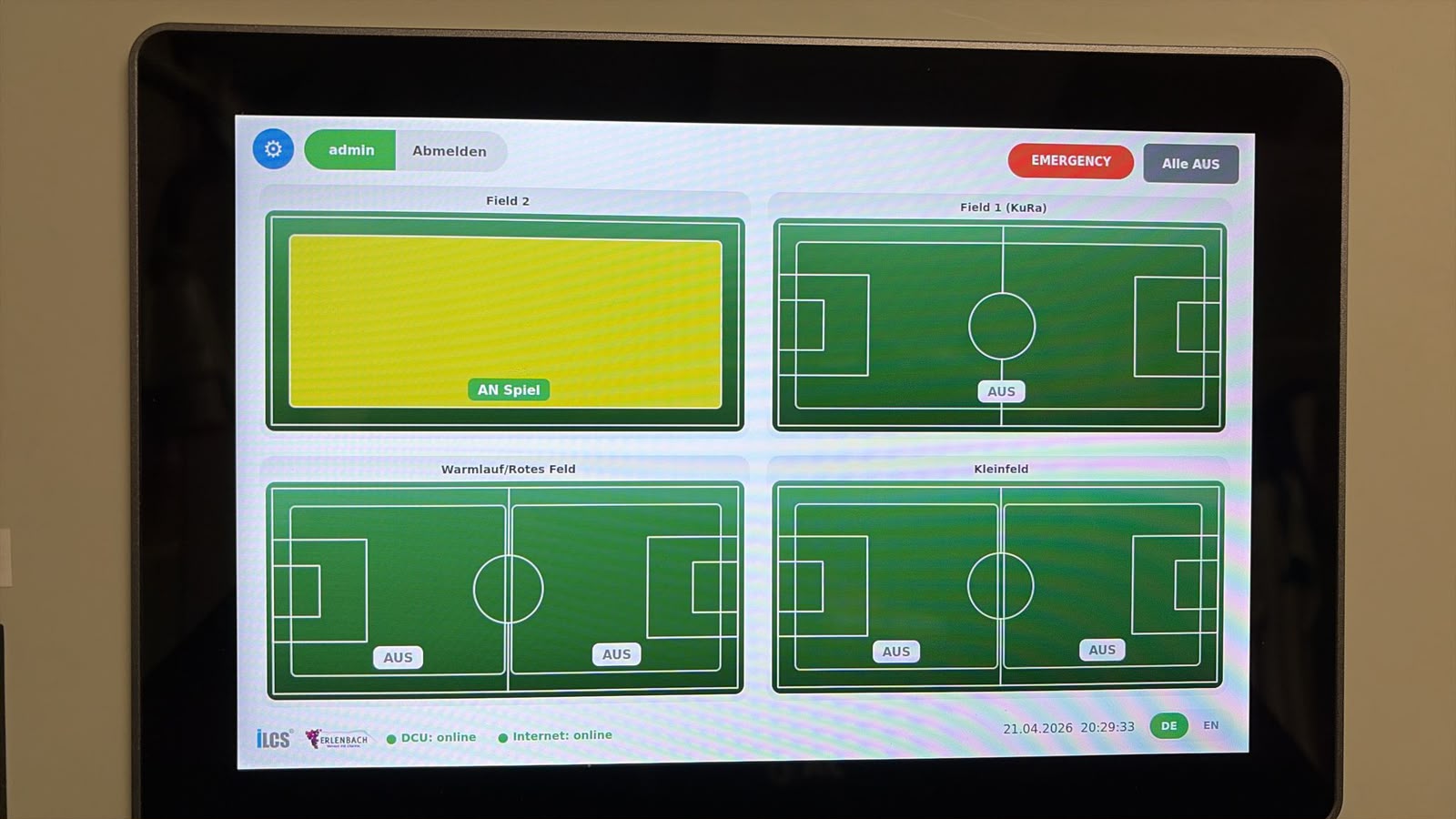
SensorBox, connected on its own
Radar traffic, particulate from PM1 to PM10 and noise in one pole-mounted box with its own eSIM — usable where there is no lighting network to join.
Open →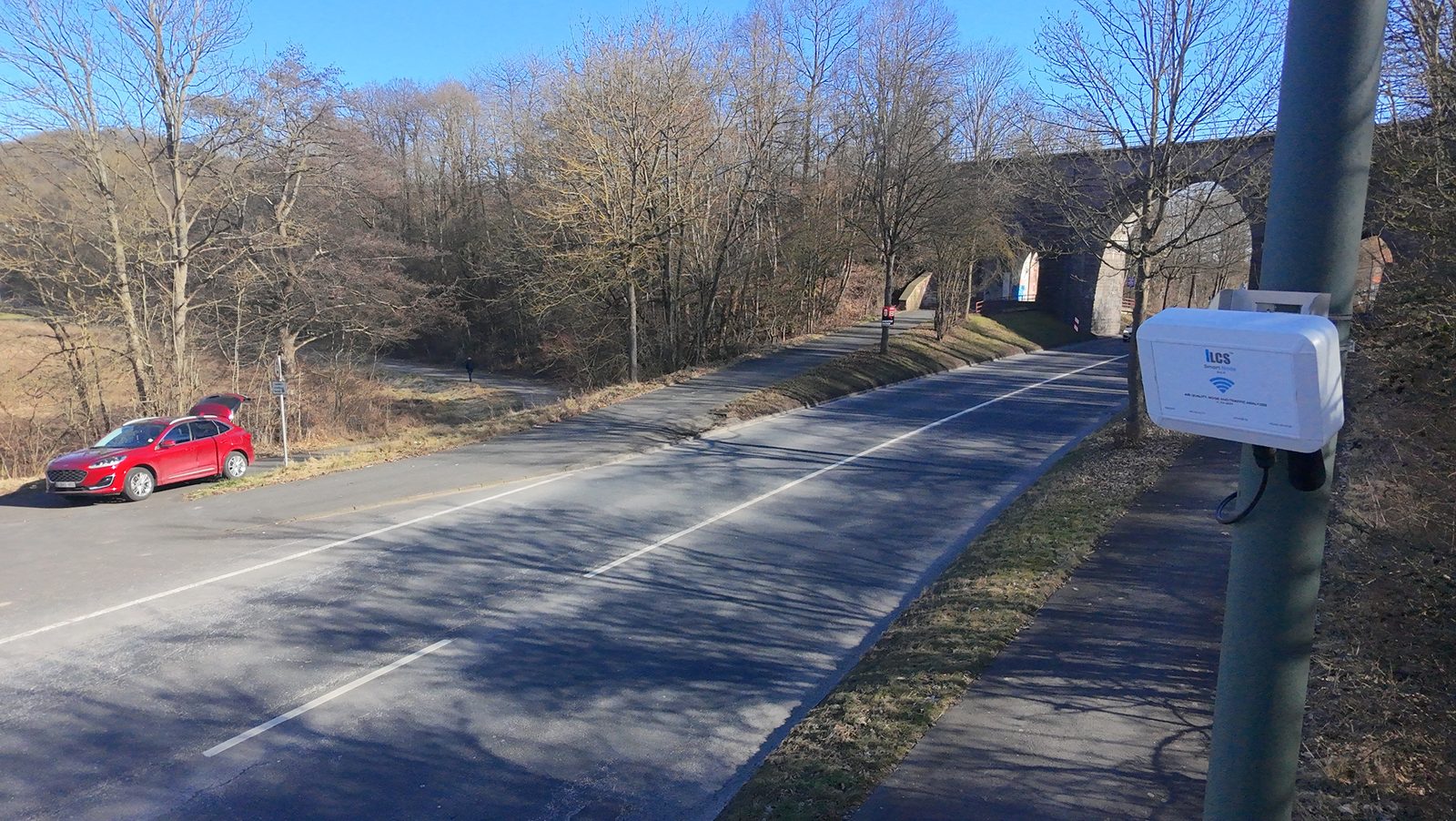
Designed and engineered in Italy.
Firmware, radio stack, adaptive algorithms and platform are ours. That is why a request for a different interface, a different meter or a different protocol usually ends in a firmware release rather than in a "no".
Firmware over the air
Signed updates to nodes, gateways and controllers, over the same mesh, without a visit to every pole.
Open at the edges
DALI-2 / D4i towards the driver, Modbus towards the switchgear, LoRaWAN and APIs towards everything else.
Long-lived
Devices installed a decade ago are still in service and still receiving firmware.